How to Write a Past Due Invoice Notice (With Examples)
Step-by-step guide to writing a past due invoice notice at every stage — 30, 60, and 90 days overdue — with real examples and tone escalation tips.
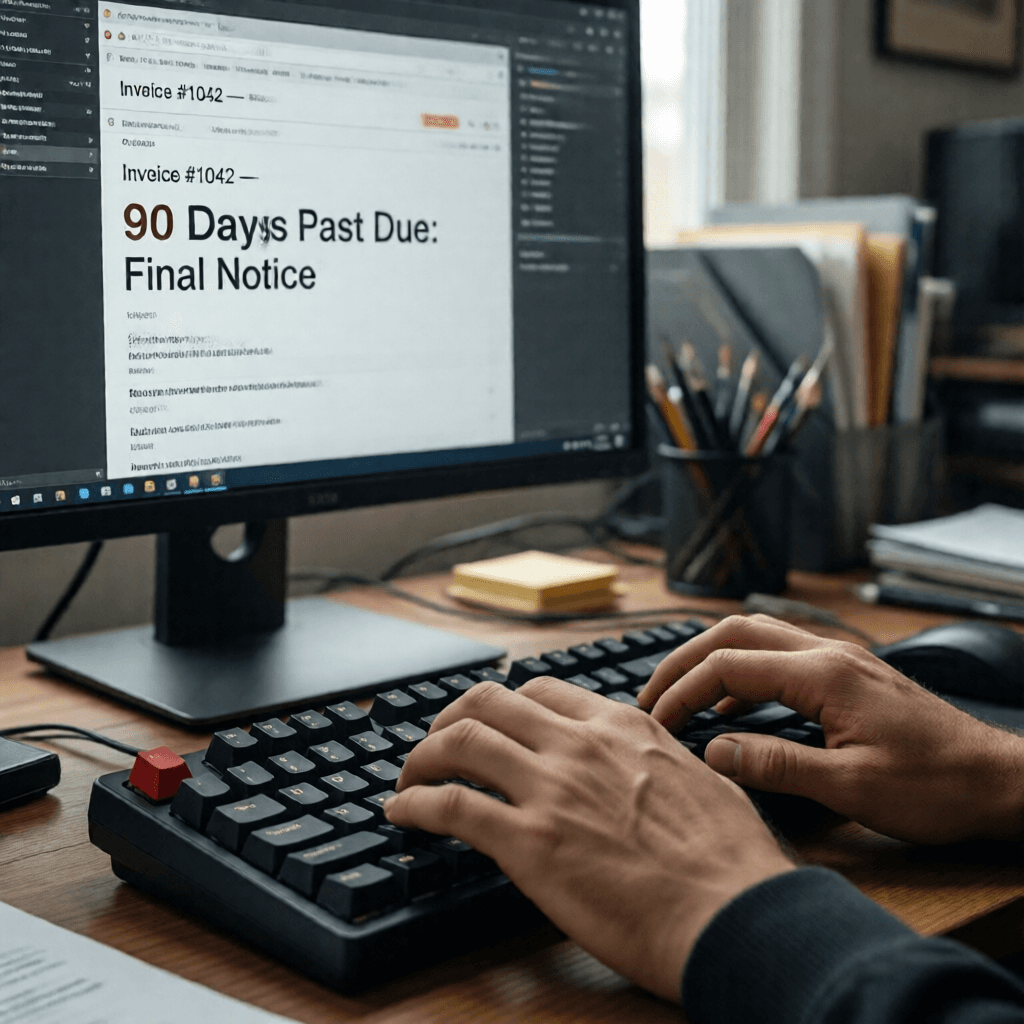
You sent the invoice. You waited. Nothing. Now it's past due, and you're staring at your inbox trying to write an email firm enough to actually get paid without torching the client relationship. Here's the answer: stop treating it as awkward. Treat it as a process.
A past due invoice notice is not a reminder. A reminder goes out before or on the due date — soft, courteous, easy to dismiss. A past due notice goes out after the deadline passes and the money hasn't landed. The language is different. The subject line is different. The urgency is categorically different. Sending another "just checking in!" when an account is 60 days late is how freelancers lose weeks chasing invoices that should have cleared last month.
- 30 days overdue: Polite but firm — restate the invoice number, amount, and include a payment link.
- 60 days overdue: Businesslike and direct — state the account is 60 days past due and set a hard 7-day deadline.
- 90 days overdue: Final notice — cut all apologies, state consequences (collections, legal action), give a 72-hour ultimatum.
What Separates a Past Due Notice From a Regular Reminder
The moment a due date passes, three things must shift: the subject line gets specific, the tone gets direct, and you stop asking — you start stating. "Just following up" is a reminder. "Invoice #1042 is now 30 days overdue" is a past due notice.

The subject line alone determines whether you get paid or ignored for another two weeks. Vague subjects get archived. Specific ones — invoice number, dollar amount, days overdue — land differently. "Following up again" reads as optional. "Invoice #1042 — $3,200 Due Oct 1 — Now 30 Days Overdue" reads as a financial obligation.
Most freelancers also miss the documentation angle. Every escalating notice builds a paper trail. If you end up in small claims court or with a collections agency, that trail is your evidence. Send every past due notice in writing — email works — and keep copies.
The 30/60/90-Day Escalation Ladder (With Example Notices)
Three stages, three tones, one clear playbook. Think of it as a dial that turns up — don't jump straight to consequences, but don't stay soft either.
Trigger: 1–2 days after the 30-day mark. Assume good faith, but make the obligation explicit. Reattach the invoice. Include your payment link.
Hi [Client],
Invoice #1042 for $3,200, due October 1, is now 30 days overdue. I've reattached it for reference. You can pay directly at [payment link] — let me know if anything looks off.
Trigger: 60 days after original due date. Drop the softeners. State the account status clearly, mention any late fee now accruing, and set a hard deadline.
Hi [Client],
Invoice #1042 for $3,200 is now 60 days past due. Per our agreement, a late fee of 1.5% per month is now accruing. Payment in full is required by [deadline]. Please use [payment link] or reply to confirm your timeline.
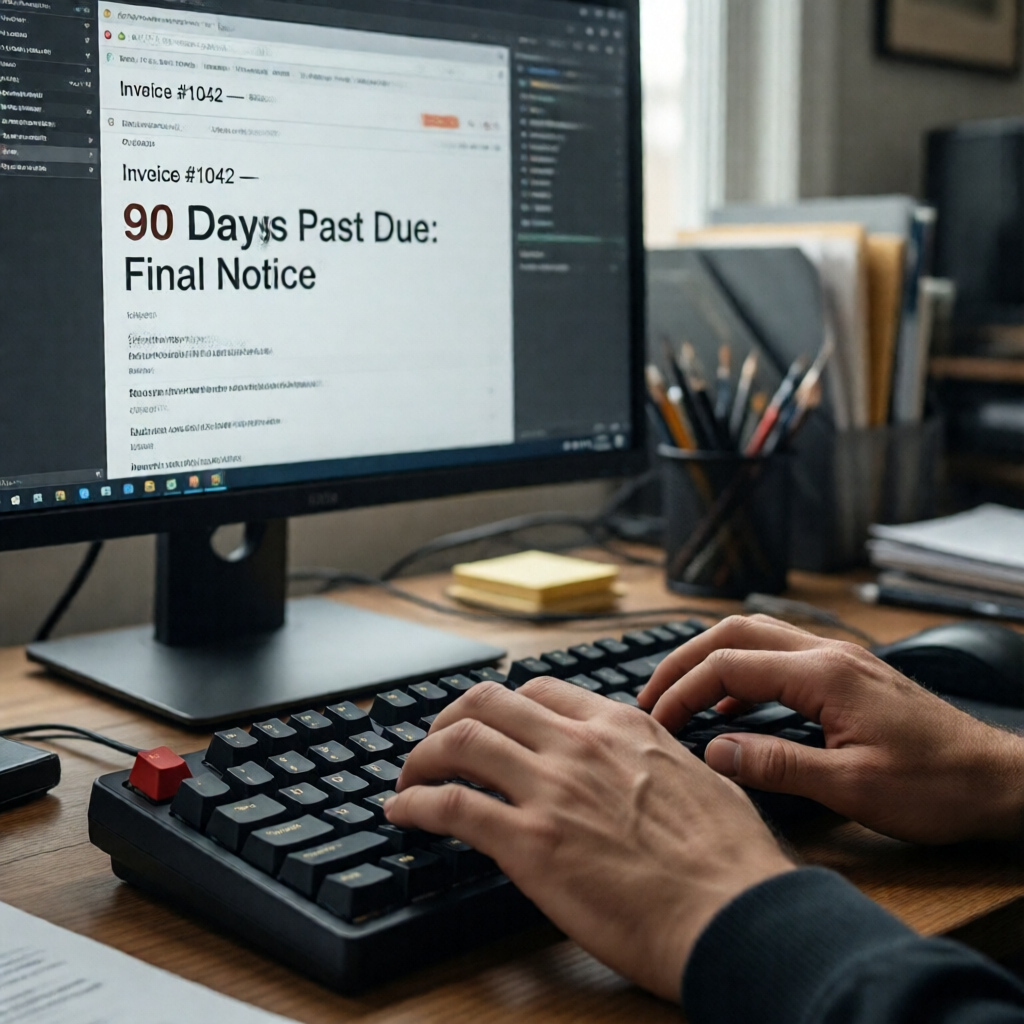
Trigger: 90 days after original due date. Zero apology, zero hedging. State the consequence and the deadline. This is documentation, not a conversation.
Hi [Client],
This is a final notice for Invoice #1042, totaling $3,200 plus accrued late fees, now 90 days overdue. If payment is not received within 72 hours, this account will be referred to a collections agency and/or small claims court. This email serves as formal written notice.
Notice how the language strips down at every stage. No "hope you're doing well." No "I know things get busy." Politeness at 90 days signals you're not serious.
"By day 90, you are not writing an email. You are building a legal record. Treat it that way."
A freelancer who spent six weeks sending "just checking in" emails on a $4,800 invoice switched to the escalation ladder. The client paid on day three of the 90-day notice. The invoice hadn't been forgotten — it had been deprioritized. A firm notice changed the math.
When to Stop Emailing and Escalate
Three notices sent, no response, invoice still unpaid — more emails are wasted time. Three paths forward: a collections agency (they take 25–50% of recovered funds), small claims court (most states handle disputes under $10,000), or invoice factoring if cash flow is the immediate problem. A formal demand letter from an attorney is worth considering before collections — costs less than court and sometimes shakes payment loose without it.
A past due invoice notice is not a negotiation. By day 90, you are documenting a paper trail — not asking for a favor.
Four Habits That Prevent Past Due Invoices Before They Start
Freelancers who automate invoice follow-ups get paid faster than those who do it manually — because reminders go out on schedule, not whenever you happen to remember.
- Use Net 7 or Net 15 payment terms instead of Net 30 — shorter windows mean faster detection of non-payers.
- Add a late fee clause to your invoice template upfront — you can't add one retroactively, but having it baked in changes client behavior from the start.
- Set up automated invoice reminders — one before the due date, one on the day, one three days after. That first burst alone catches most slow payers.
- Require a deposit (typically 25–50%) on any project over $1,000. It screens bad clients before work begins.
- Send a sharp unpaid invoice reminder email the day payment is missed — not two weeks later. Early friction costs far less than a 90-day chase.

Chasing invoices isn't unprofessional — not having a system is. A 30/60/90-day escalation ladder, specific subject lines, and willingness to state consequences will recover more money in less time than any number of soft "just checking in" emails. Build the process once. Let it run every time.
Frequently Asked Questions
What should I write in a past due invoice notice?
State the invoice number, amount owed, original due date, days overdue, a hard payment deadline, and a direct payment link. Tone: professional and firm at 30 days, direct at 60, final-notice urgent at 90. Cut the apologies. Cut the vague openers.
How many past due notices should I send before collections?
Send three: at 30, 60, and 90 days. No response after the 90-day notice with a stated 72-hour deadline? Refer the account to a collections agency or file in small claims court. Three notices is the standard paper trail.
Can I charge a late fee on a past due invoice?
Yes — but only if your original invoice or contract included a late fee clause before work began. Typical rates run 1.5%–2% per month. You cannot add one retroactively; that's why building it into your template from day one matters.
Invoicito sends automated follow-ups at 30, 60, and 90 days — so you never have to write another "just checking in" email again.
Set Up Automated Reminders — Free