Translator Invoice Template: How to Bill for Translation, Interpretation & Localization Work
Free translator invoice template covering per-word, per-hour, and per-project billing. Includes required fields like source/target language and word count.
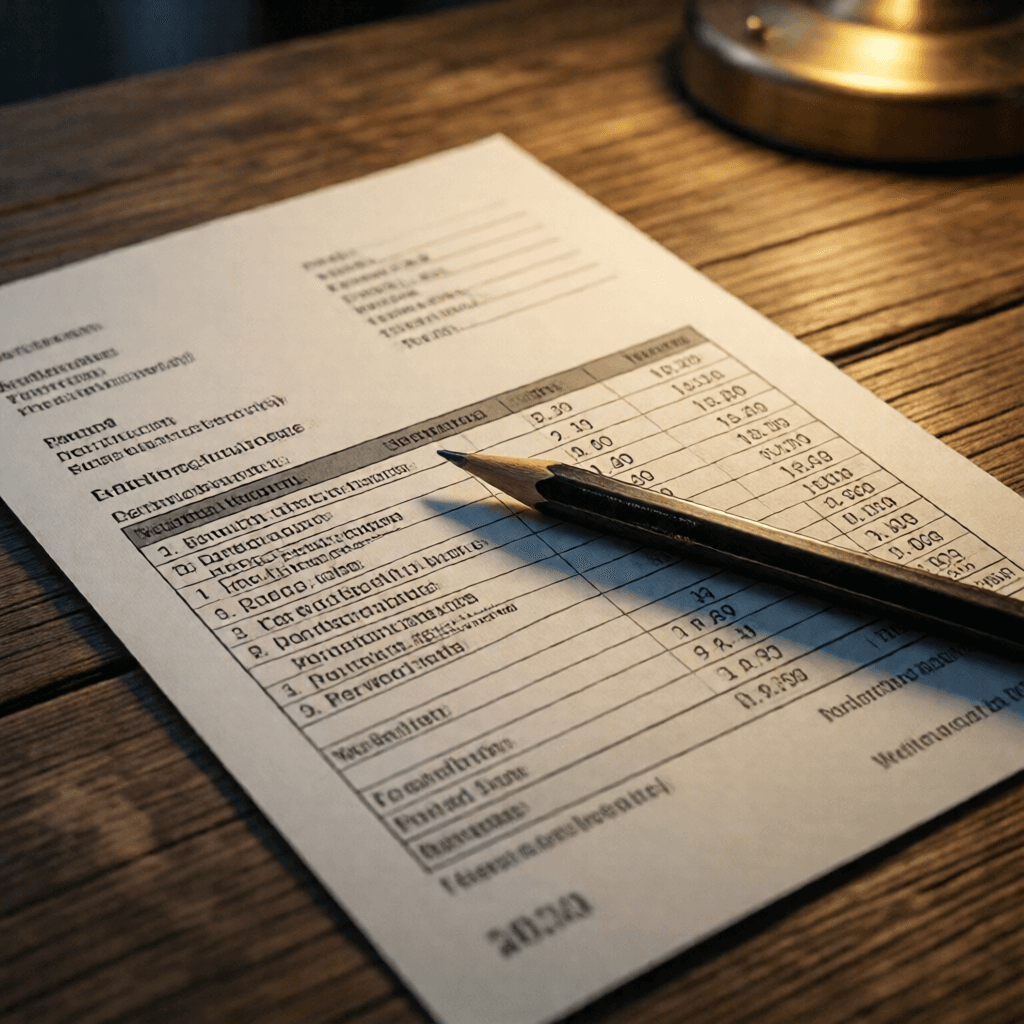
A copywriter charges per word. A developer charges per hour. A translator? You might charge per source word, per target word, per hour, or a flat project fee — sometimes all four in the same month. Every translator invoice template you've ever pulled from a generic site has the same blind spot: no field for source language, no field for target language, no word count. That's not a minor omission. It's the entire job. Using a one-size-fits-all invoice as a translator is like filing a medical claim on a restaurant receipt — the form just wasn't built for what you do.
- Translation invoices need source language, target language, word count, and rate type — standard templates skip all four.
- Four billing structures exist: per source word, per target word, per hour, and flat project fee.
- Interpreters invoice differently — they bill by time, not word count, and must include session date, duration, and location.
- You can build a complete translator invoice free, no account needed, with custom line items for every job type.
Why a Generic Invoice Template Fails Translators
Translation billing is multi-dimensional in a way most freelance work isn't. Your rate shifts by language pair, by subject matter — legal and medical command a real premium over general content — and by which word count you're billing against. None of that fits inside a standard "Description / Quantity / Rate" row. A generic template doesn't just miss a few fields; it misses the entire logic of how translation is priced.

Knowing what to put on an invoice is a reasonable start, but translators need a layer of profession-specific fields on top of the standard ones. That's what this template is built for.
Every Field a Translator Invoice Must Include
Beyond the standard invoice basics — invoice number, date, due date, your name and business info, client details, and payment terms — a translation invoice needs these fields to be professional and dispute-proof.
| Field | Why It Matters |
|---|---|
| Source language | Establishes the starting point of the work |
| Target language | Defines the deliverable and the language pair rate |
| Word count (source or target) | State which one — rates differ significantly |
| Rate type | Per source word / per target word / per hour / flat fee |
| Subject matter / specialty | Legal, medical, technical — signals expertise, justifies premium |
| Delivery format | Document type, file format (Word, InDesign, etc.) |
| TM discount note (if applicable) | Some agency clients request translation memory discounts — note the applied reduction or decline it explicitly |
Interpreters, add these too: session date, start and end time, location (in-person or remote), and language pair. An interpretation invoice is fundamentally a time-based document — far closer to a time-worked invoice than a word-count one.
The 4 Translation Billing Structures (With Invoice Line Examples)

Every billing model is legitimate. The only rule: state which one you used. Ambiguity causes disputes — and disputes delay payment.
Example line: "English → Spanish translation, marketing brief — 2,400 source words × $0.12 = $288.00"
Example line: "English → German product descriptions — 3,100 target words × $0.10 = $310.00"
Example line: "Court interpretation, in-person, 3.5 hours × $95/hr = $332.50"
Example line: "Full localization, SaaS onboarding flow (EN → FR), flat rate = $750.00"
Always state which billing model you used — directly on the invoice. "2,400 source words × $0.12" is clearer than "translation services — $288." Clients who understand the breakdown pay faster.
Take Priya, a certified legal translator working English→Hindi in Chicago. Her generic template read "translation services — $450." A corporate client disputed it, claiming they'd agreed to a lower rate. She had no documented proof otherwise. When she rebuilt her invoices with source word count, rate per word, and subject matter — legal contracts — disputes stopped. The detail signals expertise. Expertise commands payment.
Still working out your rates? The guide on how much to charge as a freelancer covers the pricing frameworks that apply directly to translation work.

A translator invoice needs source language, target language, word count — specify source or target — rate per unit, and subject matter. Without those fields, you're leaving every invoice open to dispute and presenting yourself as a generalist. Add them. It takes 30 seconds and closes the door on payment friction permanently.
Build Your Translator Invoice Free — No Account Needed
Invoicito's free invoice generator lets you add custom line items for every job type — source language, target language, word count, rate type — without forcing you into a rigid layout. No account required. Download as PDF instantly.
Or start from the base invoice template and customise from there.
FAQ
Should I charge per source word or per target word as a translator?
Most translators charge per source word because the client can verify the count before approving the job. Per target word makes sense when the target language consistently expands — English to German being the textbook case. Either model is defensible. What's not defensible: not stating which one you used.
What's the difference between a translator invoice and an interpreter invoice?
Interpreter invoices are time-based — hourly or half-day/full-day rates. They need session date, start and end time, location (in-person or remote), and language pair. Translation invoices run on word count or project scope. Both require source and target language. That field belongs on both documents, every time.
Do I need to list the CAT tool or software I used on my invoice?
No. You don't need to disclose your tools. If a client requests a translation memory discount, you can add a line item noting the reduction — or decline. If no discount was agreed upfront, leave it off. Don't volunteer that conversation by raising it yourself.
What payment terms should a translator use?
Net 7 or Net 15 is standard for most translation freelancers — shorter than the Net 30 common in other industries. For large localization projects, require a deposit upfront. The full breakdown of invoice payment terms covers the tradeoffs between each option.